Policies do more than outline rules. They help turn your program’s values and goals into everyday practices. That’s why each Go NAPSACC module includes evidence-based practices related to policies, including having written policies on specific topic areas and recommendations for what to include.
For ECE programs, clear, written policies can help everyone understand how the program operates and what is expected. They provide a shared understanding for educators, staff, children, and families and can help everyone work together while avoiding misunderstandings. They can also serve as a reflection of your program’s mission, vision, and values.
What is a Policy?
An ECE program policy is a set of rules that help staff and families understand what is expected of them and provide guidance on how to follow a specific practice. Policies provide a consistent approach that can help turn expectations into everyday practices.
Share Your Values & Vision
Your policies are an opportunity to put your program’s values, mission, and vision into writing. They reflect what your program considers most important and provide a way to communicate those priorities with staff and families.
When your values are reflected in your policies, you create a shared understanding of what those values look like in practice.
Setting Expectations
Policies also help communicate expectations—what families can expect from your program and staff, and what you expect from families. For new staff and families, sharing policies during orientation can help establish clear expectations from the start.
Clear policies can also help everyone understand their roles and responsibilities, making it easier for staff and families to work together and reducing the potential for misunderstandings.
Making Changes Sustainable
One of the most powerful roles policies can play is helping positive changes last.
After putting in the work to meet Go NAPSACC evidence-based practices, updating your policy is an important step toward making those changes sustainable. Putting your practices in writing helps create consistency over time, even as new staff, families, and children join your program.
In other words, a policy can help move a positive change from something your program is working toward to something that becomes part of how your program operates.
Where to Find Policies
Policies may be captured in different places, depending on the audience. Directors, teachers, and staff often look to their orientation materials and/or staff manual to find program policies. Families may receive a family handbook when they enroll that outlines the policies they are expected to understand and follow.
You may already have policies in place without realizing how many opportunities there are to build on them. Some policies you may find in a staff manual or family handbook include a child sick-leave policy, an attendance policy, or a pick-up and drop-off policy.
Tips for Writing Successful Policies
When creating or updating a policy, getting started can sometimes be the hardest part. That’s why Go NAPSACC offers sample policy text for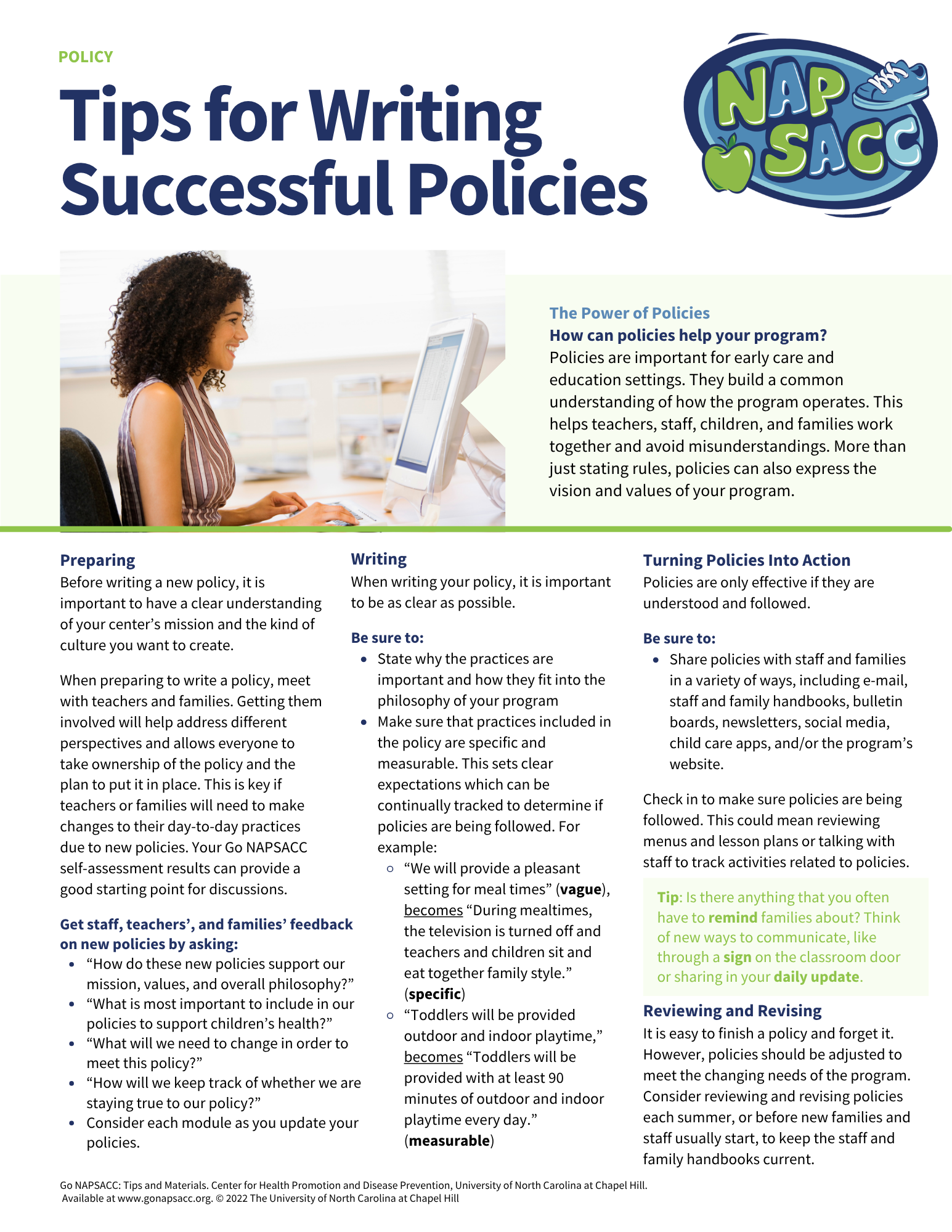 each module in our Tips & Materials library.
These resources provide customizable policy language that you can adapt to fit your program. They include the topics that must be addressed to meet Go NAPSACC’s evidence-based practices, along with sample text for staff and family handbooks.
You can also get a preview of the Go NAPSACC Tips & Materials library with Tips for Writing Successful Policies.
This resource provides guidance for developing and writing effective policies, along with steps for putting those policies into practice and making them sustainable over time.
The Power of Policies
A policy may start as a few sentences on a page, but its impact can extend far beyond the written document. When policies clearly communicate your program’s values, set expectations, and support consistent practices, they can help create an environment where positive changes become part of everyday life.
Whether you are creating a new policy or strengthening one you already have, taking the time to put your practices into writing is an important step toward making those practices sustainable.