The tools available in Go NAPSACC's ECE program accounts guide early childhood educators through its 5-step improvement process to make healthy changes to their programs. Learn more about each of the steps and tools offered below.
Step 1 in the process is to assess current practices.
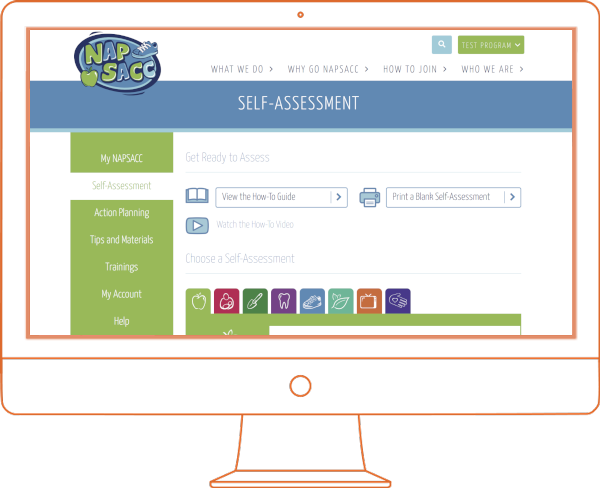
Our self-assessments allow ECE programs to assess their current practices in comparison to Go NAPSACC's evidence-based practice standards. ECE programs can start in any of the eight Go NAPSACC modules to determine their strengths and identify areas for improvement.
Step 2 focuses on creating an action plan for change.
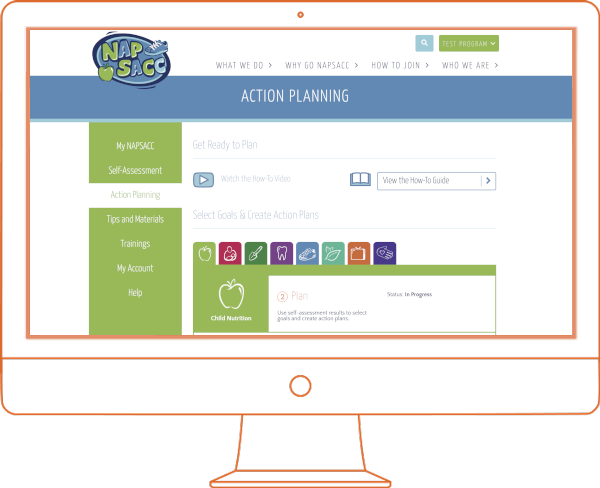
Our action planning tool helps ECE programs select goals and create plans for improvement. Based on the self-assessment results, ECE programs can build on their strengths or make big strides toward positive change. Each goal leads to a sample action plan that can be edited and customized to the ECE program's needs. Following the action plan becomes a roadmap to success.
Step 3 is to put the plans into action.
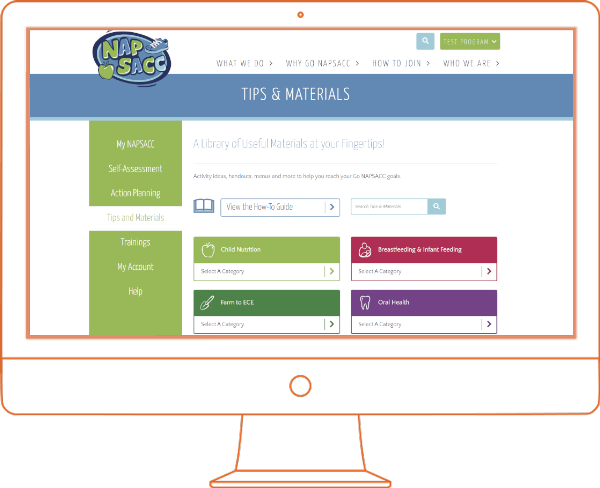
Our Tips & Materials library offers resources to help educators reach their goals. The library offers how-to guides, educational materials for staff, ideas for classroom activities, and tools for engaging families. Many resources are also available in Spanish.
Step 4 is to strengthen skills through on-demand educator trainings.
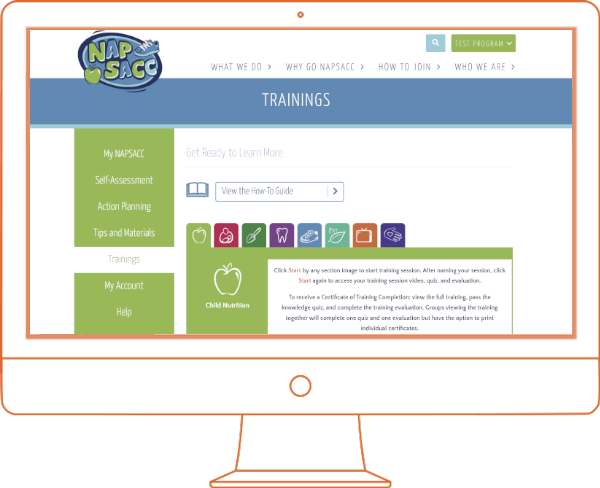
Go NAPSACC's 44 half hour online trainings dig deeper into the evidence-based practices and provide tips for implementing new strategies in ECE programs. Go NAPSACC trainings are available for credit in most participating states.
Step 5 is to reassess and celebrate progress.
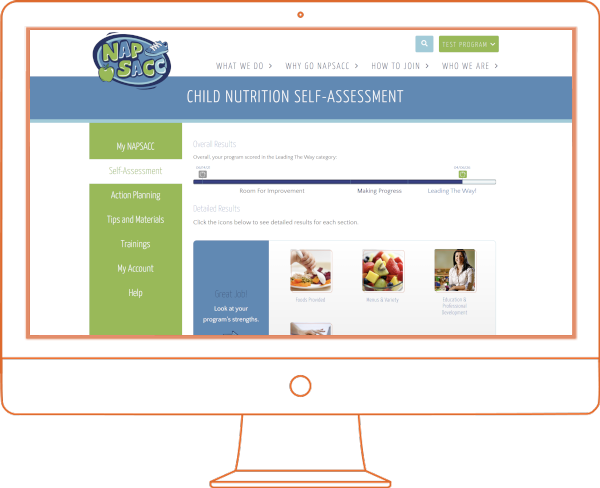
Once ECE programs have accomplished their goals, they retake the self-assessment to document their changes. This provides information on the improvements made and opportunities for further changes.