August is National Breastfeeding Month— a perfect moment for early care and education (ECE) programs to strengthen the support they offer to breastfeeding families. Although ECE staff play a crucial role during this stage, eight out of ten early childhood educators and directors report feeling unsure about how to support breastfeeding families.
Go NAPSACC’s Breastfeeding & Infant Feeding module is designed to change that. With practical tools, evidence-based guidance, and ready-to-use resources, your program can confidently build a welcoming, informed, and supportive breastfeeding community.
Why Breastfeeding Support Matters in ECE Programs
Go NAPSACC recommends that educators and staff use a variety of strategies to promote and support breastfeeding, especially through positive attitudes and proactive communication. This can look like:
-
Talking with families about the benefits of breastfeeding and how your program supports it
-
Sharing educational materials and resources
-
Connecting families with community organizations
-
Showing encouragement and positivity toward breastfeeding
These small actions make a big difference. Returning to work or school after maternity leave is one of the most vulnerable times for mothers to stop breastfeeding, making support from ECE staff a vital source of reassurance. Research shows that women who feel supported are more likely to continue breastfeeding exclusively for the first six months.
Start by Building Staff Confidence
Program leaders—whether center directors or family child care home owners—can begin by assessing staff comfort and knowledge around breastfeeding. Ask your team what feels easy, what feels challenging, and what support they need.
Then, plan together. Go NAPSACC’s Tips & Materials library includes resources that help staff feel more prepared, such as:
-
Supporting Mothers to Breastfeed
-
Be a Caregiver Who Supports the Breastfeeding Mother
These tools offer simple, actionable ways to build confidence and consistency across your program.
Encouragement Goes a Long Way
We know that offering praise or expressing support can sometimes feel awkward at first. But families notice and appreciate these moments of encouragement. Here are a few go-to phrases staff can use:
-
“Your baby is lucky to have such a dedicated family.”
-
“Breastfeeding isn’t easy, but you’re doing a great job.”
-
“Our program enjoys caring for breastfed babies.”
-
“Breastfeeding is good for your baby.”
Even brief, positive comments help families feel seen and supported.
Connect Families to Community Resources
A strong breastfeeding community extends beyond your program. Gather local resources and share them with families and staff using this special preview into Go NAPSACC’s Tips & Materials library: Breastfeeding Support Contact List (Spanish Version)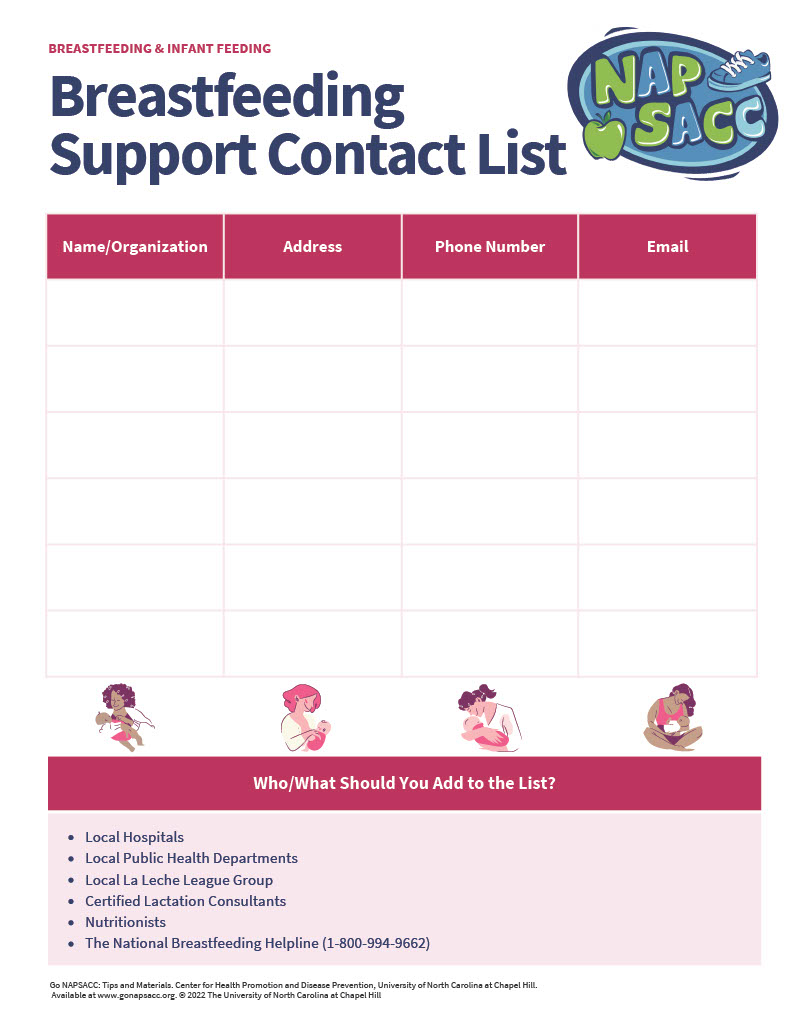
Consider adding contacts in your area, such as:
-
Hospitals
-
Public health departments
-
La Leche League groups
-
Certified lactation consultants
-
Nutritionists
-
The National Breastfeeding Helpline (1-800-994-9662)
Having these resources ready—and knowing how to share them—helps families feel connected and cared for.
A Community That Lifts Families Up
National Breastfeeding Month is a reminder that breastfeeding support is a community effort. With Go NAPSACC’s tools and your team’s commitment, your ECE program can become a place where families feel encouraged, informed, and supported every step of the way.
This article was written by Sarah Merrill, Community Health & Wellness Resource Team summer intern with information from Go NAPSACC resources developed by our team of content experts and public health researchers.