Portable play equipment includes any toys—homemade or store bought—that children can carry, throw, push, pull, or kick and teachers can easily move and switch out.
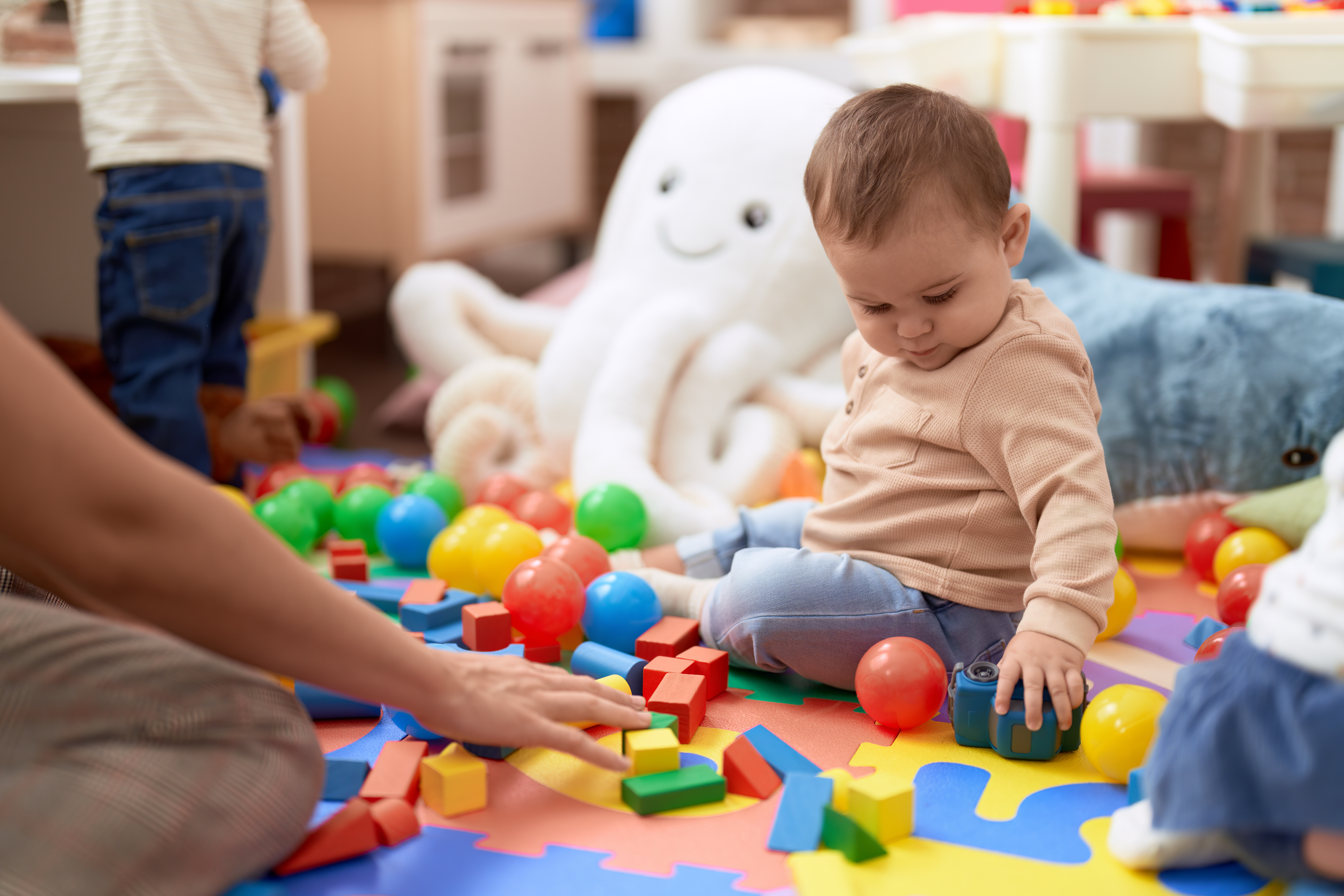
Some classic examples include:
-
Hoops
-
Balls
-
Scarves
-
Bean Bags
-
Tunnels
Portable play equipment offers a cost-effective and versatile option to increase physical activity for infants and children in early care and education (ECE) settings. Research shows that adding portable play equipment can increase physical activity levels for infants and young children. It is also woven throughout Go NAPSACC’s evidence-based practices for the Infant & Child Physical activity and Outdoor Play & Learning modules.
Portable play equipment often utilizes “loose parts”—materials that can be moved, carried, combined, redesigned, lined up, or taken apart and put back together in multiple ways. With no fixed purpose or instructions, loose parts invite children to experiment, imagine, and create. They support open-ended exploration and spark creative thinking, problem-solving, and collaboration.
Developmental Benefits Across Ages
Infants: Building the Foundation
Portable play equipment supports healthy brain development by strengthening attention, encouraging exploration, and introducing cause and effect. Physically, it promotes reaching and grasping, helps infants shift from reflexive to voluntary movements, increases body awareness, and supports early motor development.
Toddlers: Learning Through Movement
For toddlers, portable play equipment becomes a gateway to early math and science concepts, experimental learning, and creative thinking. It boosts coordination, balance, motor skills, and confidence as toddlers learn to move independently and navigate their environment.
Preschoolers: Advancing Complex Skills
As children grow, portable play equipment supports more sophisticated developmental gains. It enhances creativity, information gathering, working memory, independence, and teamwork. Physically, it strengthens fundamental motor skills, movement concepts, body awareness, and overall endurance.
High Impact, Low Cost
One of the best parts? These benefits do not require a big budget. Many portable play materials can be made from everyday items you already have in your classroom or program. With a little creativity, you can create engaging, developmentally rich play experiences at no or very low cost.
Explore low-to-no cost ways to promote physical activity “Low Cost Ways to Promote Physical Activity in Child Care Centers” in the Tips & Materials library.
Portable Play Ideas to Try
Infant Sensory Hoop 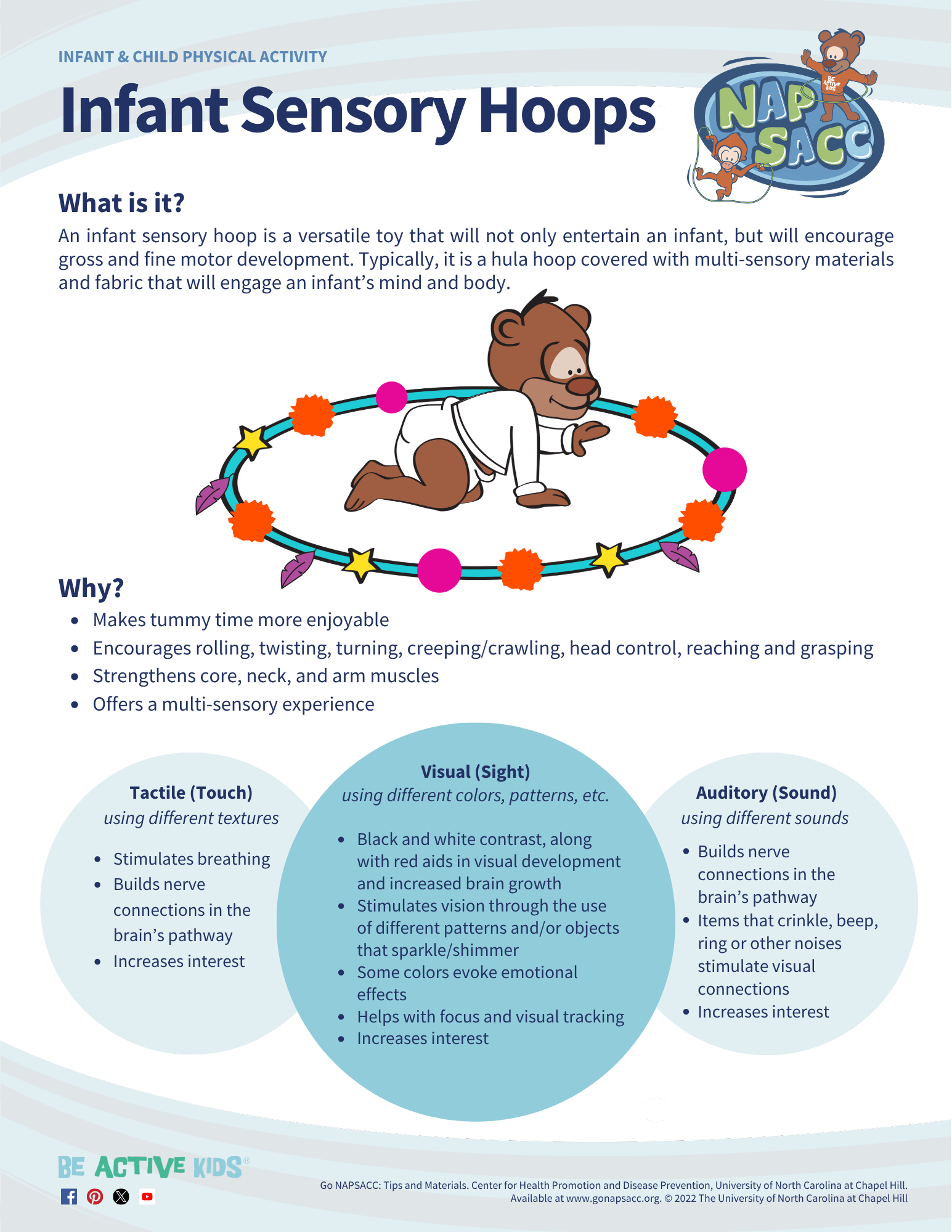
An infant sensory hoop transforms tummy time into a multi-sensory adventure. Start with a simple hula hoop and attach materials like loofahs, soft brushes, silk ribbons, and shower rings using zip ties or ribbons. This activity stimulates:
-
Tactile development: Varied textures strengthen neural connections and support sensory processing.
-
Visual development: Colors and patterns promote visual tracking, focus, and brain growth.
-
Auditory development: Materials that crinkle or jingle help build sound-processing pathways.
Discover more information and instructions with this sneak peek into Go NAPSACC’s Tips & Materials resources: Infant Sensory Hoops
Cardboard Box Magic
A cardboard box is the ultimate blank canvas. Before you craft anything, let children brainstorm their own ideas—forts, tunnels, towers, obstacle courses, or something entirely new.
Explore more ideas by logging into your Go NAPSACC account and searching “50 Cool Things to Do with a Cardboard Box” in the Tips & Materials library.
Plastic Bottle Play
Plastic bottles are incredibly versatile and easy to repurpose. Try using them as:
-
Bowling pins
-
Shakers filled with beads or pebbles
-
Scoops or shovels
-
Cones for obstacle courses
Log into your Go NAPSACC account and search “25 Activities You Can Do with a Plastic Bottle” in the Tips & Materials library for even more ideas.
Bringing Big Benefits to Small Hands
Portable play equipment proves that meaningful physical activity and rich developmental experiences do not require expensive materials or elaborate setups. By offering children simple, flexible tools they can move, manipulate, and reinvent, and educators create environments that nurture creativity, confidence, and healthy movement habits from infancy through preschool.
Whether it is a sensory hoop, a cardboard box, or a repurposed plastic bottle, these everyday items open the door to exploration, problem-solving, and joyful play. When programs embrace portable play equipment, they are not just adding toys—they are investing in stronger bodies, brighter minds, and more active learning for every child.
This article was written by Sarah Merrill, Community Health & Wellness Resource Team summer intern with information from Go NAPSACC resources developed by our team of content experts and public health researchers.